

Online payday loans offer short-term borrowing for expenses that arise before an upcoming paycheck. Their digital application process may feel convenient, but fees and repayment terms can make them costly.
This guide explains how payday loans work, their costs, risks, alternatives, and important legal considerations. It also answers common questions to support more informed borrowing decisions.



What Are Payday Loans Online?
An online payday loan is generally a small, high-cost loan that is typically due on the borrower’s next payday. The CFPB says payday loans are commonly $500 or less, although loan limits and availability vary by state.
How Do Online Payday Loans Work?
Online lenders usually request identification, income, banking, and contact information through a digital application.
Repayment may involve an ACH authorization or another agreed method, so borrowers should understand the payment schedule and authorization before accepting funds.
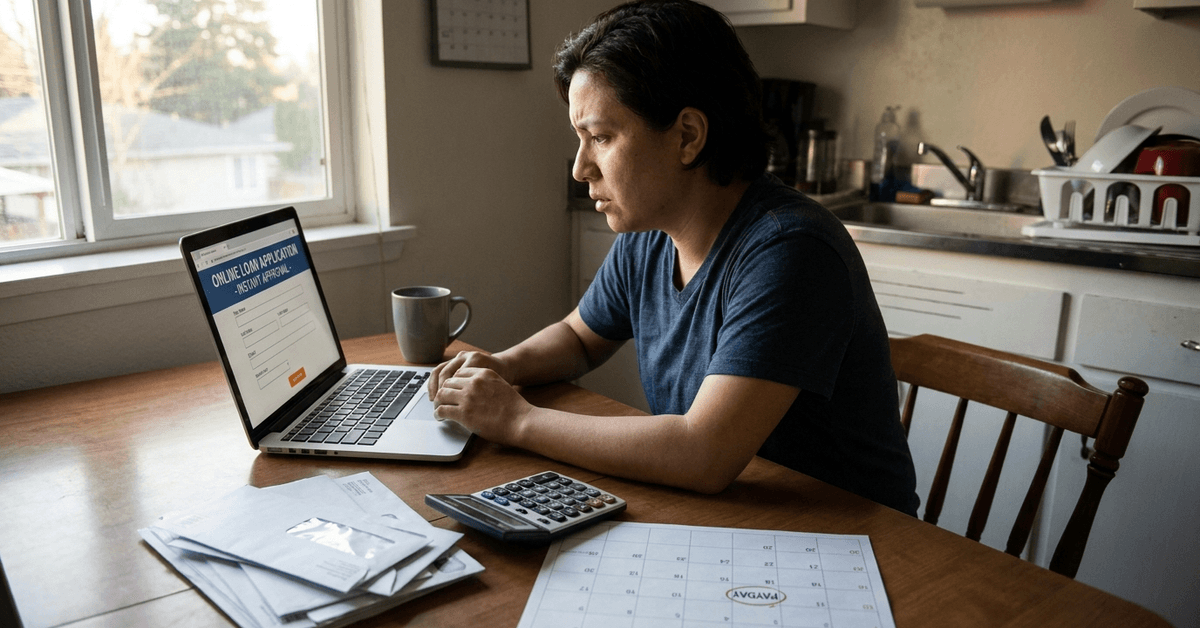
Typical Online Application Steps
The exact process varies by lender and state. Verify the lender’s legal authorization and review the full loan terms before submitting sensitive information.
- Verify the lender’s licensing or authorization.
- Submit requested identification, income, and banking information.
- Review the APR, finance charge, total repayment, and due date.
- Read any automatic payment authorization carefully.
- Accept the agreement only after understanding the terms.
The Pros and Cons of Online Payday Loans
Payday loans may provide quick access to cash, but their short repayment periods can place pressure on the next paycheck. Comparing the benefits and risks before borrowing can reveal whether another option is more manageable.
Advantages of Payday Loans Online
The main advantages involve convenience and access for some borrowers who may have fewer conventional options. These benefits should always be compared with the total borrowing cost and repayment deadline.

- Applications can usually be completed online.
- Funding may be relatively fast.
- Payday lenders generally do not rely on nationwide credit reports for eligibility.
Disadvantages and Risks
The biggest concerns are high finance charges and compressed repayment schedules. Repeated rollovers or renewals, where permitted, can increase the overall cost substantially.
- A typical two-week loan can carry an APR near 400%.
- Repayment may consume part of the next paycheck.
- Rollovers can add fees without reducing principal.
- Automatic withdrawals may create account problems if funds are insufficient.
- Unpaid balances may move to collections.
Online Payday Loan Costs Explained
Payday-loan pricing is often expressed as a fee for every $100 borrowed. The CFPB says fees may range from $10 to $30 per $100, with $15 being common, depending on state law and loan terms.
Using a $15 fee per $100, a two-week payday loan has an APR of almost 400%. The following illustrative examples show that fee structure, not universal lender pricing.
| Loan Amount | Illustrative Fee | Total Repayment |
|---|---|---|
| $200 | $30 | $230 |
| $400 | $60 | $460 |
| $500 | $75 | $575 |
Is It Safe to Apply for Payday Loans Online?
Safety depends on the lender, applicable law, data practices, and contract transparency. Borrowers should verify licensing and protect personal and banking information before using an unfamiliar website.
Signs of a Trustworthy Online Lender
A legitimate lender should clearly identify its business and explain costs before a borrower agrees. Transparent APR and repayment details are more meaningful than promises of fast approval.
- Provides clear APR, fees, repayment amount, and due date.
- Gives verifiable business and customer-service information.
- Is licensed or authorized where required.
- Provides written loan terms before acceptance.
- Does not demand suspicious upfront payments to release funds.
Alternatives to Payday Loans
Other choices may provide lower costs or longer repayment periods, although eligibility varies. Compare the APR, fees, repayment dates, and total amount due before choosing any alternative.
- Ask a bank or credit union about small-dollar loans.
- Request a payment plan from a service provider or creditor.
- Ask an employer whether a paycheck advance is available.
- Explore nonprofit or government assistance.
- Compare manageable credit or installment options.
For example, Possible Finance offers a small-dollar installment loan rather than a traditional lump-sum payday loan.
Its product page describes four scheduled payments, but borrowers should still compare the full cost and eligibility terms with other options.
How to Recognize Potential Risks and Red Flags?
Urgent financial needs can make aggressive offers harder to evaluate. The FTC warns about fake loan messages and scams seeking money or sensitive personal information.
Common Red Flags
Scam offers may use urgency, guaranteed approval claims, or unusual upfront-payment demands. Verify the company independently before providing bank details or identity information.
- Guaranteed approval regardless of circumstances
- Unexpected texts or calls about loans never requested
- Requests for payment before loan funds are released
- Missing or unverifiable company information
- Pressure to provide sensitive data immediately
Legal and Regulatory Considerations
Payday-lending laws differ across the United States, and some states prohibit or effectively restrict these products. Borrowers should check state lending rules and relevant federal disclosure protections before accepting a loan.
Important Compliance Points
The Truth in Lending Act requires disclosure of important credit costs, including the APR, before agreement. State law may also regulate fees, loan amounts, rollovers, and product availability.
- Review the APR and finance charge.
- Verify lender authorization in your state.
- Check rules covering rollovers or payment plans.
- Understand any ACH authorization for automatic debits.
- Keep copies of agreements and payment records.
Frequently Asked Questions
Common questions involve credit reporting, loan limits, and alternatives. Answers can vary with state law and individual lender practices.
Do Online Payday Loans Affect Your Credit Score?
Payday lenders generally do not report positive payment history to the nationwide credit bureaus.
Unpaid debt may be transferred to collections, and qualifying collection information can later affect a credit report. Payday loans therefore should not be treated as a dependable credit-building method.
How Much Can I Borrow Online?
The CFPB describes payday loans as generally $500 or less. State law may set higher or lower limits, while lenders may apply additional eligibility rules.
Compare the amount offered with the total repayment obligation rather than borrowing the maximum automatically.
Are There Safer Ways to Borrow Money Quickly?
A credit-union loan, employer advance, creditor payment plan, or assistance program may offer different costs and terms.
Credit cards or installment loans may also be options when repayment remains manageable. Compare APR, total cost, due dates, and missed-payment consequences before choosing.
Conclusion
Online payday loans may provide short-term access to cash, but high fees and short repayment schedules can create financial pressure. Reviewing the APR, total repayment, lender authorization, and payment method helps clarify the true cost.
Payment plans, small-dollar loans, or other alternatives may offer different repayment structures. Careful comparison supports a more informed decision before accepting funds.