
Prepaid debit cards have become even more relevant in 2026, especially for those looking to manage money without traditional banking.
Whether you’re wary of banks, have limited access, or simply want extra control, these cards offer a flexible option.


This article aims to help readers—especially those seeking independence from banks—navigate the current landscape of prepaid debit cards without a bank account.
Here, practical information is prioritized, focusing on security, convenience, and accessibility. For people exploring alternatives, the right prepaid card could make everyday spending easier and perhaps just a bit less stressful.
Why Choose a Prepaid Debit Card Without a Bank Account?
Sometimes, opening or managing a bank account just doesn’t make sense, or it’s not possible. Prepaid debit cards, in many cases, step in as a simple solution.
Yet, the reasons people seek these cards go beyond just demographics. There’s also a strong trend toward financial privacy and a desire for straightforward money management—without surprise fees or the need for credit checks.
Independence from Traditional Banks
For some, a prepaid debit card brings autonomy. There’s no need to maintain a minimum balance or worry about overdraft charges.
If someone has had negative banking experiences or faced account closures, prepaid cards open up practical daily spending again, all without judgment or hassle.
Better Budgeting and Spending Control
With prepaid cards, overspending is off the table. The card only works with what’s been loaded onto it; there’s no credit extended.
This makes them a go-to option for teaching budgeting skills or setting spending limits, especially for families with kids or shared expenses.

Financial Inclusion for the Unbanked
It’s worth noting—not everyone qualifies for a checking account. In 2026, a surprising portion of adults remain unbanked or underbanked.
Prepaid debit cards bridge this gap, offering a safe alternative for receiving pay, making purchases, or even paying bills online.
Privacy and Security Concerns
Some folks just want a layer of privacy. Rather than linking every purchase to a major account, using a prepaid debit card can keep routine spending separate. And if a card is lost or stolen, only the prepaid funds are at risk.
How Prepaid Debit Cards Work in 2026?
Prepaid debit cards require users to load money onto the card in advance, either by cash, direct deposit, or mobile app transfers.
The funds are not a credit line, so there’s never a risk of debt from overspending. After the load, they can be used anywhere major debit cards are accepted, online and in-store.
Loading and Recharging Options
Modern prepaid cards often offer reloads via cash at retailers, partner kiosks, mobile apps, or by transferring money from payrolls or government benefits.
Some can even accept instant transfers from payment apps or friends, and reload locations keep expanding.
Access to ATM Withdrawals
Most reputable prepaid debit cards now provide nationwide or even global ATM access. This makes it possible to withdraw cash nearly anywhere, though it’s wise to check for possible fees before frequent use. Sometimes there’s even fee-free ATM networks.
Cardholder Protections
In 2026, consumer protection around prepaid cards has improved. Nearly all options come with basic fraud protection, and card balances are usually FDIC-insured once loaded, especially those managed by major financial brands. Just, not every card is identical in coverage, so a quick review of terms is smart.
Key Features to Compare in Prepaid Debit Cards
Selecting a prepaid card isn’t always straightforward because the fine print matters a lot. Not all cards are equivalent, and the little details—fees, limits, ways to load funds—can have a major impact on how user-friendly they actually are.
Activation, Monthly, and Transaction Fees
Some prepaid cards are free to get started, while others might charge activation fees or monthly maintenance fees. There could also be separate fees for withdrawals, balance inquiries, or reloading the card.
Even minor amounts add up over a year. Looking for mostly fee-free options is a good way to avoid unpleasant surprises.
Reload and Withdrawal Limits
Every card will set its own limits for how much money can be loaded at once, how often reloading is allowed, and maximum daily withdrawals.
For high-volume users, these caps could be inconvenient, so larger limits might suit someone with regular cash flow.
Mobile App and Online Access
Today, great prepaid debit cards offer dedicated mobile apps for tracking, reloading, and even budgeting. Some apps even include instant alerts on spending or fees.
Not all brands support full mobile functionality, so if app management is a priority, checking this first could save frustration later.
Acceptance and International Use
Most prepaid debit cards are affiliated with Mastercard or Visa networks, enabling worldwide acceptance.
But it’s worth noting, international use can trigger additional fees, so examine conditions if travel or online shopping abroad is expected.
Top Prepaid Debit Cards Without Bank Account Requirements in 2026
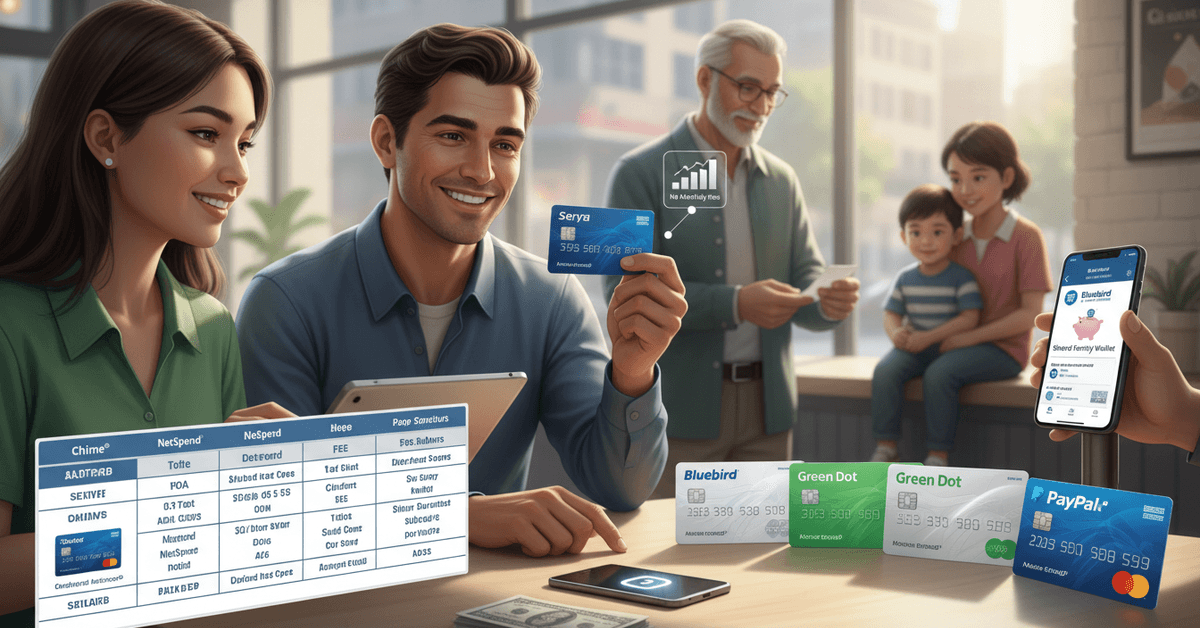
Several prepaid providers continue to stand out for their broad acceptance, feature set, and security features. Each offers different advantages, and a comparison table would help visualize differences clearly.
Chime® Visa® Prepaid Card
Chime, traditionally known for its neobank services, continues offering a prepaid debit card not requiring a full bank account.
It provides fee-free access to a large ATM network and no minimum balance restrictions. App features are robust, too.
NetSpend® Prepaid Mastercard®
One of the veterans in prepaid, NetSpend works well for both direct deposit of paychecks and government benefits. It’s highly flexible, with customizable alerts and a respected reputation for user-friendly account management.
Bluebird® by American Express
Often recommended for families, Bluebird has no monthly fees and does not require a traditional bank account. It allows for multiple subaccounts, which can be handy if sharing with kids or for household budgeting.
Green Dot® Prepaid Visa® Card
Offering broad retailer acceptance and simple online registration, Green Dot remains popular. Mobile check deposits and an extensive reload network set it apart, although some fees may apply depending on usage habits.
PayPal Prepaid Mastercard®
This card is easily linked with a PayPal account, making it useful for online shopping or direct deposits. It’s quick to set up, and loading funds is straightforward for those already using PayPal’s platform.
Serve® American Express® Prepaid Debit Account
A digital-first approach, Serve supports direct deposit, bill payments, and free cash reloads at select locations. Its mobile app makes daily transactions smooth and provides instant notifications with each use.
Tips for Choosing the Right Prepaid Debit Card
Deciding can feel overwhelming, especially given all the variations in fees and features. Perhaps the most useful first step is reflecting on spending habits.
If you travel often, a card with international support could be crucial, while families may prioritize subaccounts or parental controls.
- Check the total cost of ownership: Fees can seem small but add up over time.
- Review cardholder protections: Is your balance FDIC-insured? What happens if you lose the card?
- Look at reload and withdrawal convenience: Are there local cash reload options?
- Think about mobile access: A solid app often makes money management easier.
- Consider customer support quality: Few things are more frustrating than unresolved issues.
Common Pitfalls and How to Avoid Them
Some prepaid card users encounter issues not always obvious up front. Occasional frustrations range from undisclosed fees to declined transactions or unexpected account freezes.
- Read full terms and conditions before activating—sometimes the details hide important exceptions.
- Remain cautious with card activations found at checkouts, as store policies change frequently.
- Avoid cards with costly inactivity fees if you won’t use the card often.
- Double-check ATM networks to sidestep frequent withdrawal fees.
Legal and Tax Considerations in 2026
Although prepaid debit cards don’t require credit checks or bank accounts, they still fall under financial regulations.
In some jurisdictions, cards with high transaction volume may ask for ID verification, especially under tightened anti-fraud measures introduced this year.
If you are paid through a prepaid card, reporting income remains a legal obligation. Tax agencies in some locations now partner with card issuers for greater transparency, so tracking payments and keeping receipts is more important than ever.
Changing Regulations and Fees
With the growing popularity of prepaid options, regulators update rules frequently. In 2026, fee transparency and user protections are increasingly top of mind, but occasional discrepancies crop up.
Reviewing updates posted by known consumer protection agencies or on official issuer websites can help keep users informed.
Dispute Resolution and Support
If issues about unauthorized charges or account errors arise, most major cards have established dispute resolution processes. Keeping a copy of terms and transaction history can speed up this process.
Support standards vary, though, and sometimes one brand feels more responsive than another. It’s just a reality of the space.
Final Thoughts on Prepaid Cards
Prepaid debit cards can be a practical option for people who want spending control without a traditional bank account.
Their value depends on fees, reload access, ATM availability, mobile tools, and cardholder protections.
Users should read the terms carefully and avoid cards with hidden inactivity or withdrawal costs. With the right choice, prepaid cards can support safer everyday spending and better budgeting.