

Cleaning and housekeeping jobs are some of the most accessible ways to enter the South African labour market, especially in a context of high unemployment.
These roles exist in homes, hotels, offices, malls, hospitals and factories, and they are needed in every province.



For many workers, professional cleaning careers provide the first stable income, on-the-job training and a path to better positions over time.
Why Cleaning and Housekeeping Careers Matter in South Africa
South Africa’s unemployment rate remains among the highest in the world, which makes accessible jobs extremely important.
In this context, cleaning job opportunities are valuable because they usually require limited formal education and can be started relatively quickly.
The contract cleaning industry employs tens of thousands of workers through many registered cleaning companies across the country.
For workers who are reliable and willing to learn, these housekeeping career opportunities can lead to supervision or even small business ownership.
Types of Cleaning and Housekeeping Jobs
There is a wide range of cleaning and housekeeping jobs in South Africa, and understanding the main categories makes it easier to plan.
Residential cleaning jobs
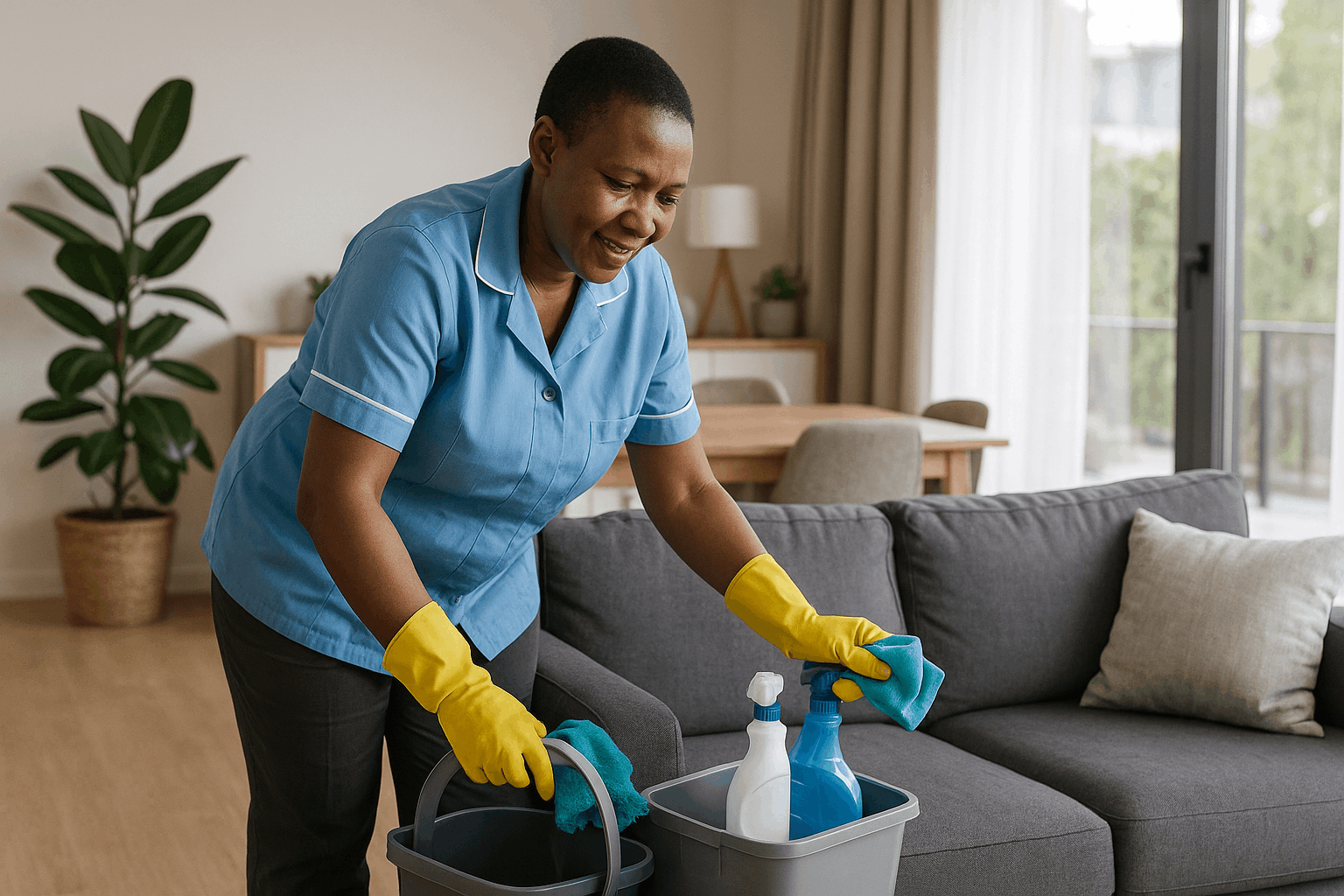
These involve working in private homes, apartments or complexes.
Tasks include sweeping, mopping, laundry, ironing, basic kitchen cleaning and sometimes childcare support.
Many domestic workers are hired directly by households, while others work via agencies or online platforms.
Hotel and hospitality housekeeping
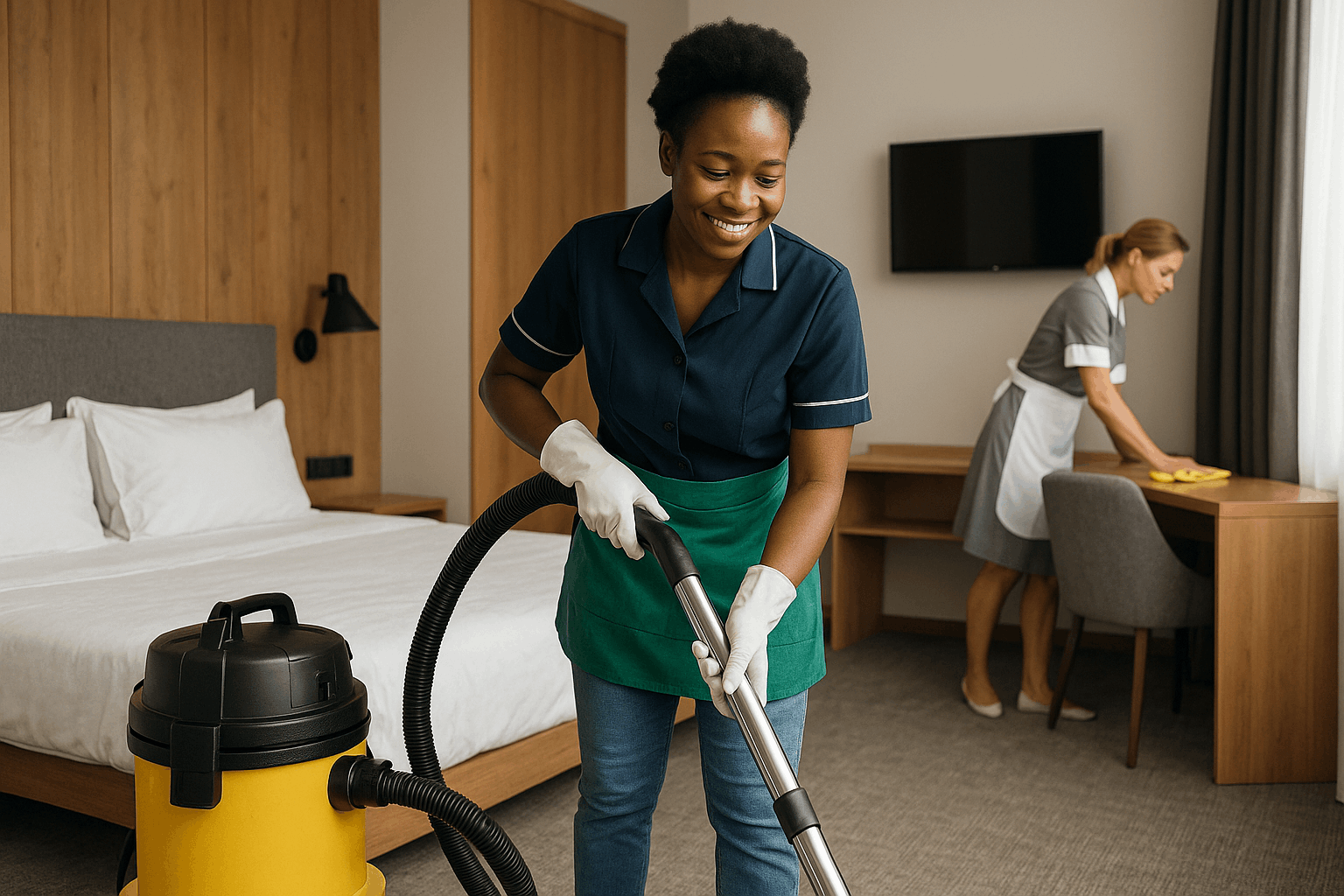
Housekeepers in hotels, lodges and guesthouses clean rooms, change bedding, restock amenities and maintain public areas such as corridors and lobbies.
In busy tourist areas, this kind of housekeeping career opportunity can offer more stable schedules and chances to move into reception or guest services.
Commercial and office cleaning
Contract cleaning companies provide staff to offices, shopping centres, universities and factories.
Workers may clean offices, toilets, cafeterias and common areas, often early in the morning or after business hours.
This is a major source of professional cleaning careers because large companies need teams, supervisors and site managers.
Healthcare and specialised cleaning
Hospitals, clinics and laboratories require strict hygiene standards. Typically pay more but demand higher skills and strict safety practices.
Staff receive extra training in infection control, handling chemicals and dealing with hazardous waste.
There are also specialised services such as industrial cleaning, high-rise window cleaning or trauma-scene cleaning.
Cleaning and Housekeeping Salaries: What You Can Expect
South Africa has a National Minimum Wage (NMW), which from 1 March 2025 is set at R28.79 per hour for most workers.
Indeed estimates that cleaners earn an average of about R5 392 per month nationwide, based on hundreds of salary reports.
Housekeepers, who often work in hotels or large homes, report an average of R5 533 per month.
PayScale’s 2025 data shows an average cleaner's hourly rate of around R23.77, with a range from about R15 to R35 per hour.
Skills, Training and Working Conditions
Most cleaning and housekeeping jobs do not require formal qualifications beyond basic literacy and numeracy.
However, employers consistently look for reliability, punctuality, attention to detail, honesty and the ability to follow instructions.
In workplaces such as hospitals or factories, understanding safety rules and the correct use of chemicals is critical.
Many companies provide short training on topics like colour-coded cleaning systems, correct use of equipment and occupational health and safety.
Advanced Requirements
Larger firms that service corporate clients often need staff with good communication skills and presentable customer service.
Workers who want to build long-term professional cleaning careers can benefit from courses in hygiene, occupational safety or hospitality.
Good references from previous employers are extremely valuable, especially for residential cleaning jobs where trust is key.
Where to Find Cleaning Job Opportunities
Online job portals such as Indeed and Glassdoor frequently list vacancies for cleaners, room attendants and housekeepers.
Many contract cleaning companies recruit directly on their websites or through walk-in applications at their offices.
Residential workers often find jobs through community networks, social media groups and referrals from current clients.
In some cities, app-based platforms connect households with vetted domestic workers and cleaners.
Long-Term Housekeeping Career Opportunities and Growth
Although cleaning is often viewed as entry-level work, there are real housekeeping career opportunities for those who stay in the sector.
In hotels and large office sites, experienced cleaners can be promoted to team leaders, floor supervisors or housekeeping managers.
In contract cleaning companies, site supervisors, area managers and training officers are common roles.
Specialisation
Workers who gain skills in healthcare cleaning, industrial cleaning or high-risk environments may receive higher pay.
Some people use experience gained in professional cleaning careers to start small businesses that offer residential cleaning jobs to others.
With careful planning, cleaning and housekeeping can therefore move from survival work to a structured career path.
Practical Tips to Build a Professional Cleaning Career
To make the most of cleaning and housekeeping jobs, workers can take several practical steps.
- Keeping a simple CV that lists experience, duties and references from previous employers is essential, even for informal jobs.
- Being consistent—arriving on time, communicating clearly about schedule changes and taking care of equipment—helps build strong relationships with clients or supervisors.
- Learning about labour rights, such as the current National Minimum Wage and entitlement to UIF and paid leave, helps workers evaluate offers and avoid exploitation.
- Short courses in first aid, health and safety, hospitality or basic business skills can strengthen a profile and open access to more formal housekeeping career opportunities.
- Workers interested in professional cleaning careers can set small progression goals: for example, moving from part-time residential cleaning jobs to a full-time contract, then to a supervisory role over time.
With awareness of typical salaries, workers can better judge whether offers are fair and in line with national minimum standards.
Conclusion: Turning Entry-Level Work into a Stable Future
In a country where unemployment remains high, cleaning job opportunities and housekeeping roles play a vital role in providing income and experience.
The hospitality sectors offer room for promotion and specialisation, creating genuine housekeeping career opportunities.
Professional cleaning careers and residential cleaning jobs can become a stable platform for long-term growth in the labour market.