

Most people have seen a cat twist mid-air and land on its feet. It looks impressive, but it’s just science and biology—and the entire reason why cats always land on their feet comes down to physics, anatomy, and instinct working together.
This article explains how this reflex works and why cats evolved it. It also explains when it can fail and what misconceptions exist.



What Is the Cat Righting Reflex?
Cats have a natural ability to twist their bodies mid-air and land upright. This is called the righting reflex, which appears in kittens at 3 to 4 weeks and becomes reliable around 6 to 7 weeks.
The reflex is a biological process that depends on balance. The vestibular system in the ear senses orientation and space. When a cat is falling, this system tells it which way is up and helps it rotate.
From there, cats make fast movements to realign mid-air. This coordination ensures upright landings. The balance mechanism is key to this action. It powers the righting reflex.
Physics Behind the Mid-Air Twist
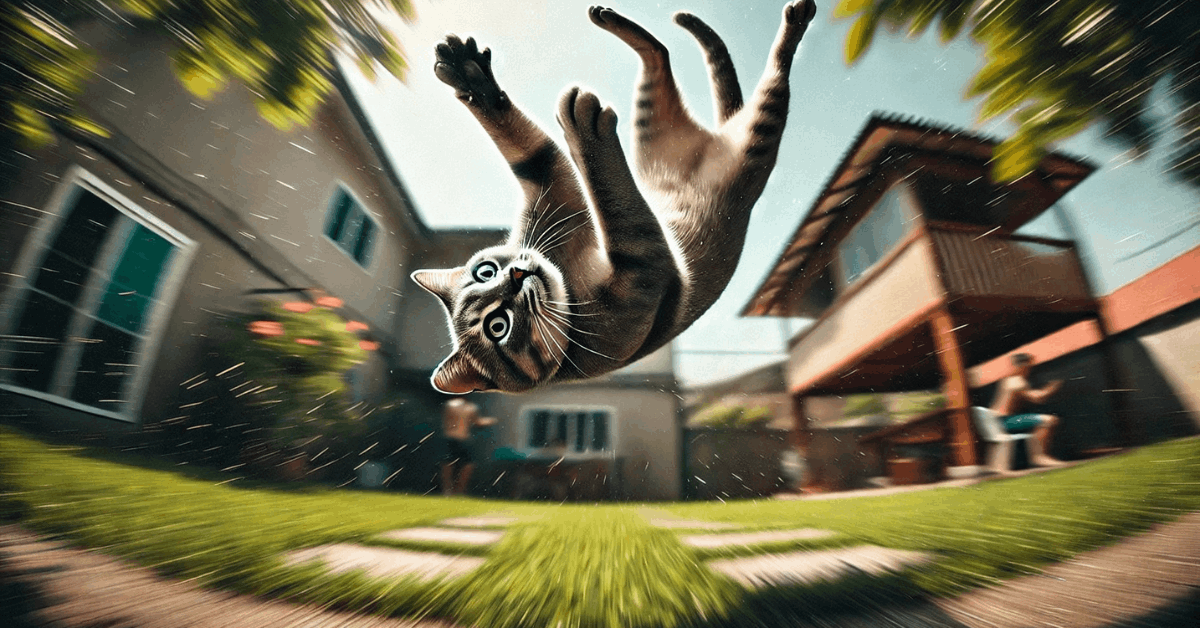
The reflex also uses physics principles. Cats don’t need to push off anything to twist mid-fall. They rotate using body motions that preserve angular momentum.
They can move the front and back halves separately. A falling cat rotates its head first, then the front, spine, and back legs. This twist is quick and effective.
The motion is torque-free and allows rotation even in short drops. The whole twist can happen in under one second.
Anatomy That Supports the Reflex
Cats are built to land safely. Their flexible spines let the front and back move independently, and their collarbone is not rigid, giving the limbs more freedom.
This helps them adjust body position while falling. Cats also have low weight and a large surface area. This body type slows their fall.
When they stretch out their legs, their body creates drag. The added air resistance helps them land with less impact.
Height Matters – Terminal Velocity in Cats
Falling from higher up can be safer for cats. Once they reach terminal velocity, their maximum falling speed, they relax and extend their limbs to slow their descent.
This reduces the chance of injury. Cats falling from above five stories often do better than from lower heights, as they have more time to correct themselves in mid-air.
At terminal velocity, they brace for landing. But that doesn’t mean high falls are risk-free.
Risk Doesn’t Equal Immunity
Cats landing on their feet doesn’t mean they’re invincible. Falls can still cause broken bones or internal injuries. The reflex lowers risk but doesn’t remove it.
Some assume cats can't get hurt, but that’s wrong. Short falls or slippery spots might prevent the reflex from working.
Age or health problems can also slow reaction time. Don't trust the reflex to protect them. Use safety measures at home.
Evolutionary Advantage
The reflex developed through evolution. Cats that survived falls avoided predators and passed on their genes, and over time, the trait became common.
Wild cats often lived in trees or cliffs. This reflex helped them survive slips and jumps, and it's not limited to pets.
Wildcats and leopards also have it. It’s a widespread feline skill.
Not a Superpower – Just Efficient Design
Many believe cats always land on their feet. That’s not true. They need enough height and time to finish the reflex.
Short falls don’t allow full rotation. Factors like age, weight, or surprise can disrupt the reflex, and older cats may respond slower.
Sick or heavy cats may not land correctly. It’s reliable, but not perfect.
Misconceptions Around the Reflex
There are common myths. One is that cats never get injured from falls. That’s false and dangerous.
Cats do get hurt. Another myth is they don’t need protection from balconies or windows. That leads to preventable accidents.
Use screens or nets to protect them. The reflex helps but doesn’t guarantee safety.
What Science Has Proven?
Experts have studied this reflex. Slow-motion videos show fast and precise movements that follow a set pattern.
It works with a flexible body. NASA even tested cats in space. However, the reflex doesn’t work in zero gravity.
It depends on gravity to function. So, the reflex is biomechanical, not magical.
Practical Advice for Cat Owners
Know how the reflex works. Don’t assume it will always protect your cat. Use barriers on windows and ledges.
Make your home fall-safe. Monitor your cat’s health and weight. Cats with issues may not land safely.
If your cat falls and seems hurt, go to the vet quickly. Awareness helps prevent harm.
How Cats Practice the Reflex While Young?
Kittens refine the righting reflex by playing and climbing. These activities help build balance and coordination. Falling from low places teaches them safe landings.
Cat trees and indoor shelves support this development. Supervised play gives kittens a safe place to fail and learn. Early experiences matter for reflex strength.
Differences Between Breeds
Not all cats land equally well. Breed, body type, and weight can affect the reflex. Slender and athletic cats usually twist faster.
Heavier breeds like Persians may not react as quickly. Age also plays a role. Younger cats have faster recovery and control.
How Injuries Still Happen?
This section lists how injuries still occur and what conditions worsen them. Use this to understand the limits of the righting reflex.
- Hard surfaces increase the impact and raise the chance of broken bones or internal damage.
- Uneven landings can twist limbs or cause fractures despite a successful righting motion.
- Short-distance falls may not allow enough time for cats to rotate and prepare fully.
- Older or overweight cats may react more slowly, making injury more likely.
- Hidden injuries like internal bleeding or head trauma aren’t always visible right away.
- High-energy impact on fragile body parts, like the chest or face, can be severe even if the cat lands on its feet.
Vet Insights on Fall Injuries
Veterinarians often treat cats with fall-related trauma. High-rise syndrome is a common diagnosis. It refers to cats injured from falls from apartment buildings.
Symptoms include broken limbs, chest injuries, or facial fractures. Treatment may involve surgery or rest. Early intervention improves outcomes.

How to Prevent Dangerous Falls?
Even though cats have a strong righting reflex, prevention is still necessary. These tips reduce the chance of injuries and make your home safer.
- Install window screens to stop your cat from falling out of open windows.
- Use balcony guards or netting to keep high places safe and secure.
- Keep furniture away from windows to avoid easy climbing paths.
- Supervise your cat when it’s on balconies or ledges.
- Create indoor climbing spots like cat trees to satisfy their urge to jump.
- Close windows during playtime if your cat is very active or curious.
Conclusion: It’s Science, Not Magic
Cats land on their feet due to anatomy and physics—not magic. Their spine, balance system, and body motion work together.
The reflex lowers injury risk, but it’s not foolproof. Knowing this helps you make smarter safety decisions for your pet.