

The Bermuda Triangle has long been associated with mysterious ship and plane disappearances. Many still wonder if this area involves real danger or is the result of persistent myths.
With modern science and tools, exploring what’s truly happening is easier. This breakdown covers the mystery's facts, theories, and possible causes.



What Is the Bermuda Triangle?
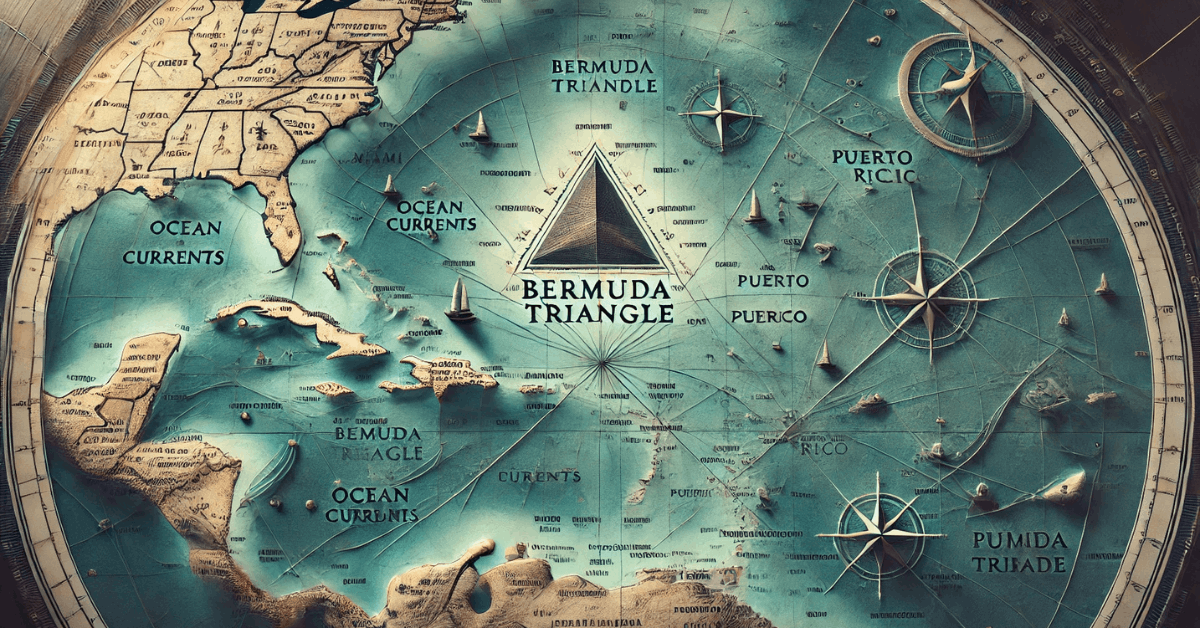
The Bermuda Triangle is a section of the Atlantic Ocean bordered by Miami, Bermuda, and Puerto Rico. It spans roughly 500,000 square miles of water.
Over the years, it gained notoriety from reports of ships and planes vanishing mysteriously. These stories were heavily publicized by early news outlets. In the 20th century, people began referring to it as the "Devil's Triangle".
The name "Bermuda Triangle" was introduced by author Vincent Gaddis in 1964. His article helped spread the idea that the region was dangerous and unexplained incidents were common.
Documented Disappearances
Many incidents gave rise to the Bermuda Triangle’s mystery. While some are explainable, others remain open to speculation. These events have been used to support theories ranging from natural to supernatural causes.
Notable Incidents at Sea
This unit highlights two of the most well-known disappearances at sea. These cases are often referenced as strong examples supporting the mystery of the Bermuda Triangle.
- USS Cyclops (1918): This Navy ship vanished with 309 crew members between Barbados and Baltimore. No wreckage or distress signal was ever found.
- Witchcraft (1967): A 23-foot cabin cruiser disappeared near Miami just after radioing for help. The Coast Guard found no debris despite being only a mile from shore.
These cases drew attention because of their suddenness and lack of evidence. They became key examples in Triangle discussions.
Aircraft Disappearances
These incidents are central to the Bermuda Triangle's association with aviation mysteries.
- Flight 19 (1945): Five TBM Avenger bombers disappeared during a training flight. A rescue plane sent after them also vanished.
- Douglas DC-3 (1948): Lost communication before reaching Miami. Thirty-two people were aboard, and no trace was recovered.
These air incidents further solidified the region's mysterious reputation. Poor visibility, navigation errors, and equipment failure were often cited, but mystery still surrounds the details.
Popular Theories Behind the Disappearances
Theories about the Bermuda Triangle range from scientific to bizarre. Some ideas are grounded in facts. Others rely more on speculation or fantasy.
Natural Explanations
Scientists have suggested several natural causes behind the disappearances:
- Weather patterns: Sudden storms, hurricanes, and rogue waves can quickly sink ships or disorient pilots.
- Magnetic anomalies: Compass errors due to magnetic variations can lead to navigation issues.
- Methane hydrates: Methane gas eruptions from the seafloor may lower water density, causing ships to sink rapidly.
These explanations are supported by environmental data. They offer rational reasons for many of the Triangle’s events.
Paranormal and Fringe Theories
Others believe stranger forces are at work:
- Aliens: Some suggest UFOs or alien activity as responsible for abductions.
- Time warps: Theories of time distortion or space-time rifts have circulated.
- Atlantis: Ancient energy from a sunken civilization is blamed in some stories.
These ideas lack scientific support. Still, they remain popular in books and documentaries.
What Do Experts Say?
Experts have extensively reviewed the Bermuda Triangle. Most argue that there’s no real mystery when you examine the facts. Data and analysis provide more grounded explanations.
Scientific Investigations
It includes official positions from scientific and governmental sources.
- The Triangle is no more dangerous than other busy sea routes, according to the NOAA (National Oceanic and Atmospheric Administration).
- The U.S. Coast Guard also dismisses the mystery, pointing to natural explanations and human error.
There is no proof of mysterious forces. Most incidents occur in high-traffic areas prone to unpredictable weather.
Statistical Reality
It presents how the numbers challenge the belief that the area is more dangerous than others.
- Studies show that accidents in the Bermuda Triangle are not unusually high.
- Navigation mistakes, mechanical issues, and storms explain most disappearances.
These findings reveal that the area’s reputation is inflated. Reports often overlook these basic factors.
Media Influence and Public Perception
The media played a key role in fueling the Bermuda Triangle legend. Many events were exaggerated or selectively reported, shaping how people view the region today.
Books, Films, and TV Specials
This segment highlights how popular media shaped the public's understanding of the Bermuda Triangle. It defines the role of books and entertainment in spreading and sustaining the mystery.
- The book "The Bermuda Triangle" by Charles Berlitz popularized the mystery in the 1970s.
- Countless TV shows and films have dramatized disappearances.
These sources often left out key facts. They focused on the unexplainable to build suspense.
Misreporting and Exaggeration
It explains why many facts remain unknown despite having logical explanations.
- Some "mystery" cases were later explained but not widely publicized.
- Errors in reporting caused confusion and reinforced myths.
Because these corrections are rarely highlighted, the myth persists. Many people still believe in the mystery despite clear explanations.
Is There Still a Risk Today?
With today’s technology, risks in the Bermuda Triangle are significantly lower. Navigation and weather monitoring have improved. Disappearances are rare and usually explained quickly.
Modern Navigation and Tracking
This segment explains how advancements in navigation and technology have reduced the risk of unexplained disappearances. It highlights tools that help ensure the safety of modern air and sea travel.
- GPS, radar, and satellite systems help track all aircraft and ships in real time.
- Ships and planes now have more durable equipment and better communication systems.
These upgrades reduce the chances of vanishing without a trace. Today, most disappearances are due to pilot error or mechanical failure.
Should You Be Worried?
This segment addresses whether the Bermuda Triangle poses a real threat today. It reviews current safety conditions and outlines the actual risk level for travelers.
- The Bermuda Triangle poses no special threat to modern travelers.
- Commercial airlines and cargo ships pass through daily without issues.
There is no reason for concern. The fear is mostly based on outdated stories.
Final Verdict: Mystery or Myth?
The Bermuda Triangle continues to fascinate, but the evidence shows a different story. Bad weather, navigation mistakes, or mechanical failure caused most disappearances.
Experts and government agencies agree there's no special danger in the region. What remains is a powerful example of how media and myths can shape what we believe to be true.