

Lightning over the ocean can look stunning, but what happens when lightning strikes the ocean? Many people assume the entire sea becomes electrified, killing everything nearby.
The truth is more specific. In this article, you’ll learn precisely what occurs when lightning hits the ocean and how it affects water, marine life, and humans.



How Lightning Forms and Reaches the Ocean?
Lightning is a massive electrical discharge caused by imbalances between clouds and the ground or ocean. Saltwater plays a unique role in how lightning behaves upon impact.
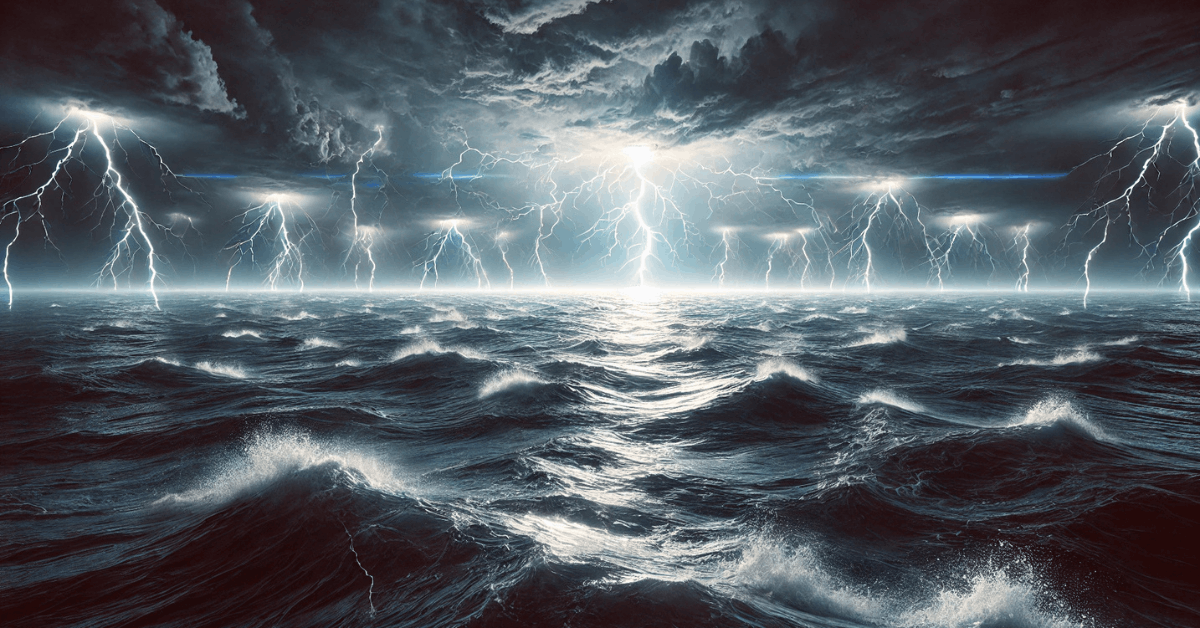
The Basics of Lightning
Lightning begins with the buildup of electrical charges within a thundercloud. These charges separate due to wind, temperature, and moisture movements.
When the imbalance becomes too great, a discharge happens. Lightning follows the path of least resistance to neutralize the charge.
That path may be a tall object, the ground, or the ocean. Its heat and energy travel almost instantly.
Conductivity of Water
Due to dissolved ions, saltwater is a strong conductor of electricity. When lightning strikes the ocean, the energy quickly spreads across the surface.
It doesn’t go very deep because the energy moves outward more than downward. This horizontal spread limits the depth of damage.
Most of the danger stays within a few dozen feet of the strike. Freshwater, in contrast, conducts electricity less efficiently.
What Happens on Impact?
The moment lightning touches the ocean, intense physical and electrical reactions occur. These effects happen within milliseconds and remain close to the surface.
Energy Dispersal in Water
The electrical charge from lightning spreads horizontally from the point of contact. Depending on the strike's strength, this dispersal can cover a radius of 20 to 30 feet.
The energy weakens quickly as it moves away from the strike zone. Deeper water receives much less energy.
This surface-focused pattern is why deeper marine life usually survives. The immediate area near the strike becomes temporarily dangerous.
Physical Effects of the Strike
When lightning hits, the temperature of the strike point can reach up to 30,000°C. That’s five times hotter than the sun's surface.
The heat creates an explosive expansion of water vapor, causing loud thunder and pressure shockwaves. Small steam explosions can occur, sometimes strong enough to disorient marine animals.
These blasts don't last long but can cause injuries near the strike zone. Human swimmers within this zone are especially at risk.
Risks to Humans in the Water
If you're swimming or diving in the ocean during a storm, you're in danger. Lightning can cause fatal injuries, even if you're not directly hit.
Distance and Exposure
The strike's energy is strongest at the surface and close to the impact point. If you’re swimming within 100 feet of a strike, you can suffer burns or worse.
Divers deeper in the water are safer but not fully protected. The surface current can reach you indirectly.
You're more at risk if you’re in a group or touching others. Spread-out bodies absorb energy differently than clustered groups.
How It Can Harm or Kill?
The biggest threats are cardiac arrest, severe burns, and nerve damage. Victims often lose consciousness and may drown even if they survive the initial shock.
Water doesn't insulate you from electrical injuries. Being immersed makes the current's effects unpredictable.
Swimmers and surfers should exit the water at the first sign of lightning. Quick action can prevent permanent injury or death.
Impact on Marine Life
Marine creatures are not immune to lightning, but their risk depends on depth and behavior. The strike only affects a small radius and rarely causes widespread marine death.
Fish and Ocean Creatures
Fish tend to swim deeper, away from the surface where lightning is most dangerous. Their depth gives them natural protection.
Surface dwellers like turtles, dolphins, and schools of fish are more exposed. If these creatures are near the strike zone, they can be stunned or killed.
Injuries may go unnoticed unless mass strandings or deaths occur. Lightning can disrupt navigation or feeding temporarily.
Ecosystem Disruption
The ecosystem impact is usually limited to a very small area. Plankton, juvenile fish, and small organisms may be wiped out instantly near the strike.
However, the ocean quickly absorbs and neutralizes the shock. Localized events may briefly affect nearby food chains.
Marine life adapts quickly unless storms become frequent in the same location. In most cases, the ecosystem recovers without human intervention.
Common Myths Debunked
There are many misconceptions about lightning and water. Some of them are misleading and potentially dangerous.
"Water Grounds You" Myth
Many believe being in water during lightning makes you safe because there's no ground. This is false. Saltwater spreads electricity effectively, so you're still exposed.
Your body doesn't need to be grounded to receive a shock. The lightning's horizontal spread affects everything in range. Water isn't protective just because it’s not land.
"Fish Die Everywhere" Myth
Another myth is that a single lightning strike kills everything nearby. The truth is, it affects a specific surface radius, not the whole ocean. Most marine life escapes by being too deep.
Only those close to the strike are harmed. If the ocean conducted vertically better, the story might be different. But it doesn't.
Safety Tips and Precautions
Knowing what to do before and during a storm can save lives. You should act quickly when you see signs of lightning.
What to Do if You’re in the Water?
You have little time to react if you're in the water when a storm is approaching. These actions can help reduce your risk of injury or death during a lightning strike.
- Get out of the ocean immediately if you hear thunder.
- Do not wait for rain—lightning can strike before the storm reaches you.
- Move far away from the waterline and avoid wet sand.
- Stay away from docks, jetties, and metal objects.
- Find shelter in a building or car, not under a beach umbrella.
- Don’t re-enter the water until 30 minutes after the last thunder.
Boat and Beach Safety
You're not automatically safe if you're near the shore or out at sea when lightning strikes. These precautions help protect you on a vessel or on the sand.
- If you're on a boat, get into the cabin and avoid touching metal surfaces.
- Drop anchor and avoid contact with the water.
- Swimmers and snorkelers should return to land immediately.
- Lightning can strike a boat directly, so avoid open decks.
- Don’t rely on weather apps alone—watch the sky.
- Always have a plan when out on the ocean.
Final Thoughts: Lightning and the Ocean Demand Respect
Lightning is powerful and doesn’t behave the way most people think. It spreads out quickly across the ocean's surface and poses a serious risk to swimmers and marine animals nearby.
The ocean doesn't safely absorb lightning—it redistributes it. Always treat lightning over water as a serious threat and respond fast to stay safe.