

Hibernation helps animals conserve energy in harsh environments. Scientists are now exploring how humans might also safely slow their metabolism.
This idea is being studied for medical and space travel uses. This article explains the science of human dormancy, its risks, and its future potential.



What Is Animal Hibernation and How Does It Work?
To understand human potential, you first must understand how animals survive extreme conditions. The process involves entering a deep sleep-like phase with reduced metabolic activity.
Their heart rate, body temperature, and breathing slow down dramatically. Some animals like bears can go months without eating, drinking, or defecating.
This condition helps them survive extreme winters with minimal energy usage. Environmental cues such as temperature and light cycles often trigger this response.

Are There Any Natural Forms of Hibernation in Humans?
Some conditions show that humans can enter a torpor-like state, though not true dormancy. Rare survival cases have occurred where individuals lived after prolonged exposure to freezing temperatures.
Monks and yogis have demonstrated slowed breathing and metabolism during deep meditation. In extreme hypothermia, the human body can lower vital functions to minimal levels.
These are not voluntary or controlled processes. Still, they provide insights for researchers.
The Science Behind Inducing Hibernation in Humans
Scientists are actively studying how to induce a dormant state artificially. NASA has supported research into human torpor for long-term space travel.
They aim to slow metabolism using controlled environments and chemical methods. Experiments in animals have tested gases like hydrogen sulfide to replicate torpor.
Other studies target the hypothalamus, which regulates temperature and metabolism. Sedation combined with body cooling has also shown promising results.
Why Would We Want to Hibernate?
There are practical reasons for entering dormancy beyond curiosity. Medicine and space exploration could benefit most.
In trauma care, slowing metabolism gives doctors more time to treat injuries. This state could reduce the need for food, oxygen, and mental stimulation for space travel.
It may also improve the psychological well-being of astronauts on long missions. Metabolic slowing could eventually become a medical intervention.
Challenges and Risks of Human Hibernation
These biological and psychological risks must be addressed before it becomes viable. Below are the primary challenges that need attention before this process can be safely attempted in humans:
- Long-term inactivity can lead to muscle atrophy and bone loss, weakening the body.
- The risk of blood clots, organ stress, and infections increases during induced stasis.
- A weakened immune system leaves individuals vulnerable during and after recovery.
- Psychological effects like memory loss and disorientation may follow extended unconsciousness.
What Technologies Could Enable Human Hibernation?
Technological advancements are key to making this safe. Multiple technologies must work together to make suspended animation viable in humans.
Cooling Chambers and Thermal Regulation
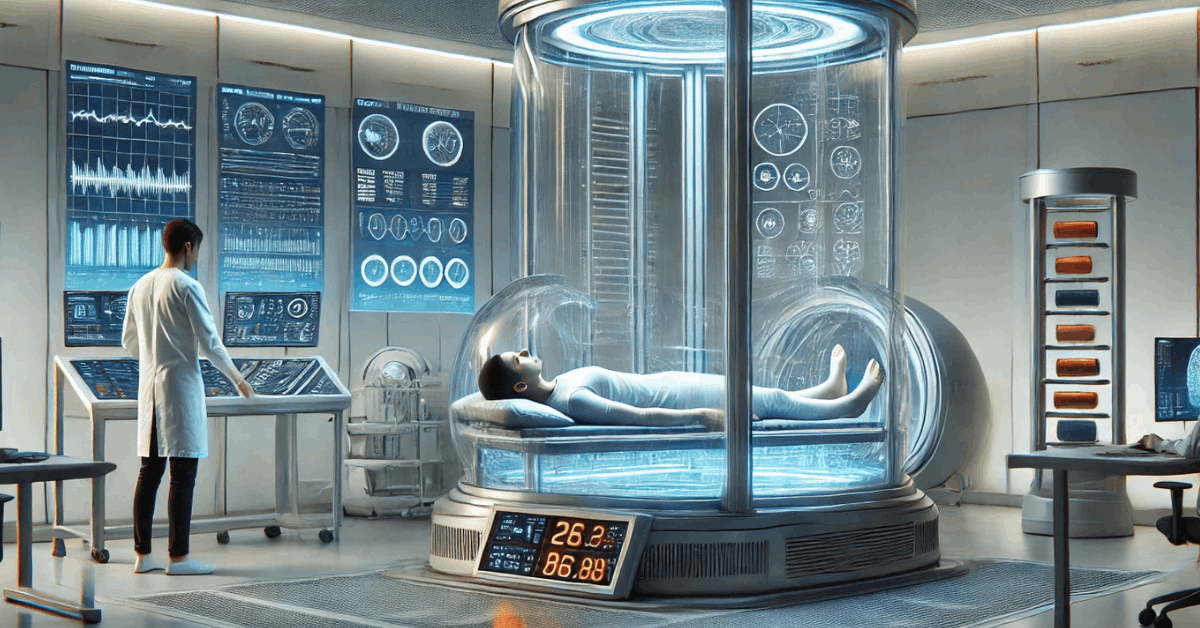
Cooling chambers are designed to reduce core body temperature safely. They slow cellular activity and lower oxygen demand.
These systems are being tested in emergency medicine and surgery. Precise thermal control is critical to avoid tissue damage.
Such equipment needs to be finely tuned for long-term use. Without this regulation, metabolic suspension cannot be sustained.
Metabolic Suppressants and Biochemical Triggers
Metabolic regulators aim to chemically slow down body processes. Researchers are experimenting with substances like hydrogen sulfide to reduce metabolic rate.
These agents mimic natural torpor responses found in animals. The primary challenge is suppressing energy consumption without harming organs.
Ongoing trials focus on dosage, delivery, and reversibility. These compounds are still in early-stage development.
AI Monitoring and Life-Support Systems
Artificial intelligence plays a key role in monitoring vitals during this state. In real time, it tracks heart rate, oxygen levels, and brain activity.
AI can detect anomalies faster than human operators. Combined with automated life-support systems, it ensures safety.
Continuous feedback allows for quick adjustments. These systems will be essential for future human trials.
How Far Are We From Human Hibernation?
We’re not there yet, but progress is steady. NASA and medical researchers are conducting controlled experiments.
Human trials are still limited to short-term torpor or sedation studies. Full-body metabolic shutdown and revival remain challenging. More funding and testing are required to solve biological limits.
Insights from institutions like the European Space Agency also contribute to current progress. We may be decades away from a working solution.
Lessons from Nature: What Animals Can Teach Us?
Scientists are learning valuable lessons from animals that use dormancy to survive. Their biology offers clues on how to manage and protect human systems.
Bears avoid muscle loss and kidney damage during extended inactivity, which may inform human metabolic solutions. Ground squirrels show unique brain protection mechanisms under low body temperatures.
These traits could lead to gene therapies or drugs that mimic hibernation benefits. Studies on this topic are being published in reputable journals like Nature and The Lancet (Nature—Hibernation Genes).
Could Hibernation Change Human Society?
If this becomes possible, society will change. It could shift our thinking about health, time, and even careers.
Long-term medical storage of patients may reduce hospital costs. It could also allow time travel into the future biologically.
Ethical and legal issues would need to be addressed. People might choose metabolic suspension seasonally or during illness.
Key Benefits and Potential Uses
Let’s explore the key scenarios where this process could be most valuable. Each one reflects how useful suspended animation could become.
Medical emergencies and trauma care:
- Giving emergency teams more time to operate could save lives.
- Reducing oxygen demand limits tissue damage in critical injuries.
Space exploration:
- Sleeping during long missions reduces mental strain and supply needs.
- It allows missions to distant planets without significantly aging the body.
Deep Surgery and Organ Transplants
- Cooling patients increases safety during high-risk surgeries.
- Organs could be preserved longer before transplant.
Military and disaster use:
- Injured soldiers could be preserved until proper care is available.
- Victims of natural disasters might survive longer while awaiting rescue.
Managing chronic illness or terminal conditions:
- Patients may choose to enter stasis through painful treatment phases.
- It opens debate about quality of life and end-of-life care.
Final Thoughts: Is Human Hibernation Our Next Evolutionary Leap?
Extended dormancy is no longer just an animal survival trick. The idea of applying it to humans has moved into real scientific territory.
While we're not there yet, research is rapidly evolving. If successful, metabolic suspension could redefine how we approach medicine, space, and even mortality.